


Polygon API – How to Choose the Best RPC Provider for Your Web3 Project

A Polygon API endpoint is the gateway through which applications, wallets, and bots interact with the Polygon blockchain. Free public RPCs come with rate limits and no uptime guarantees, while dedicated RPCs offer SLA, low latency, WebSocket support, and archive data. This guide explains when to use each type and how to evaluate providers.
What Is a Polygon API Endpoint and How Does It Work?
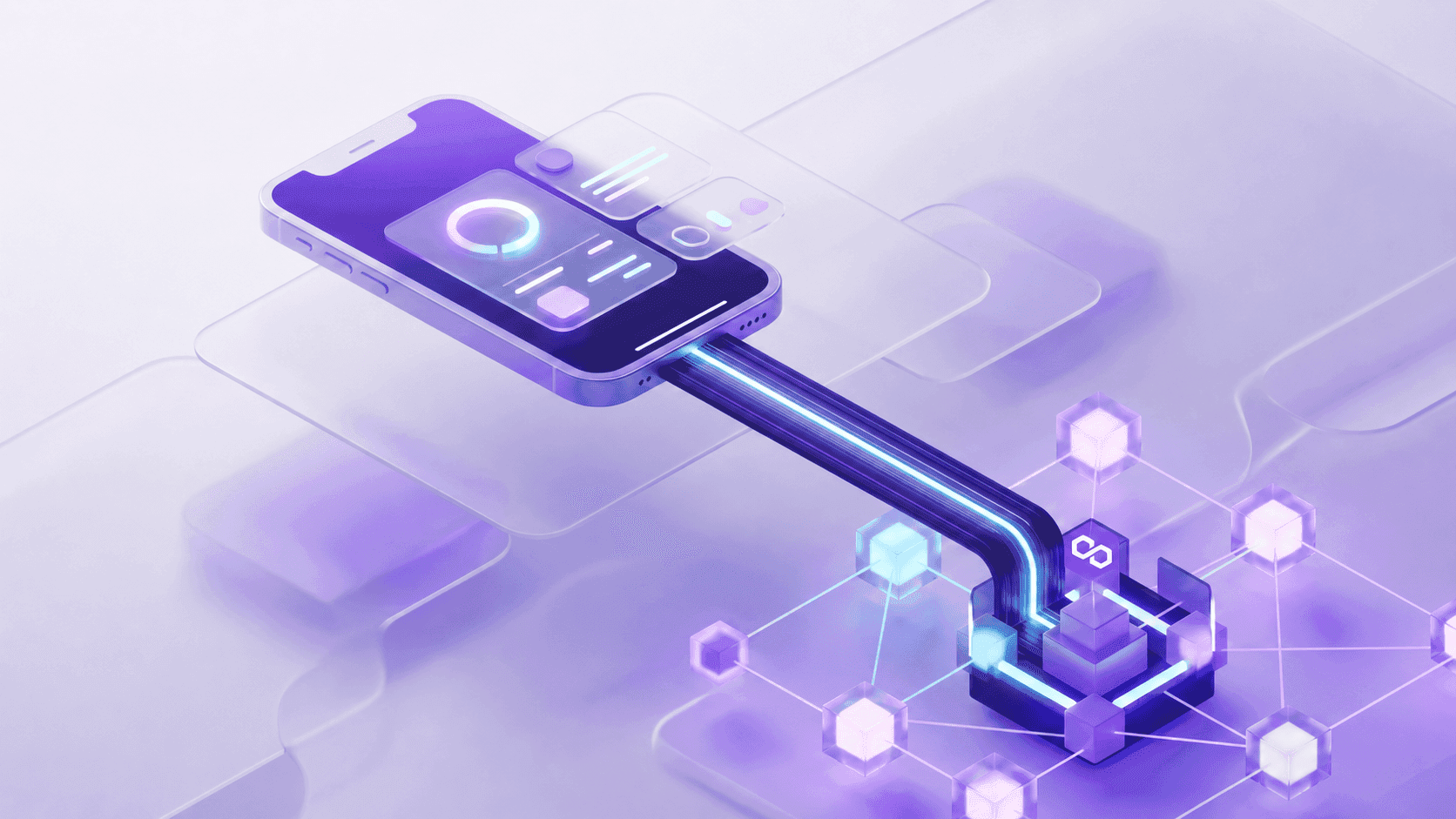
A blockchain API (typically JSON-RPC) allows external software to read data and send transactions. Without such an endpoint, your application cannot fetch balances, execute smart contracts, or monitor events. The protocol is standardised across Ethereum-compatible networks, making it easy to switch between providers.
Understanding Polygon in Simple Terms
The communication method uses a request-response model. Your application sends a message like "what is the balance of this address?" to a node address, and the node replies instantly. All popular Web3 libraries rely on a single endpoint URL to function. For beginners, it helps to think of it as a phone line to the blockchain.
How to Connect to Polygon RPC with Python (using web3.py)
For Python developers, a quick start involves importing a dedicated library. However, in blockchain development you will more often use web3.py with a provider URL. This gives you access to balances, transaction sending, contract calls, and event logs. The setup takes less than five minutes for a basic connection.
Who Benefits from a Polygon RPC – Use Cases Across Web3
Every category of Web3 application depends on a reliable endpoint. The required quality varies by use case, but none can function without one.
Tasks Handled by Polygon RPC Nodes
Endpoints serve a wide range of purposes: checking balances and token prices, executing DeFi swaps, minting NFTs, broadcasting trades, and indexing blockchain data for explorers. A single node may process millions of requests daily across these different verticals. For large projects, even temporary slowdowns cause user frustration.
polygon mainnet rpc and Support for Multiple Networks
The primary endpoint connects to Polygon PoS, but a good provider also offers endpoints for the Amoy testnet. Some providers also offer access to supernets and sidechains. Note that Polygon zkEVM Mainnet Beta is being sunset — the sequencer will be deactivated on July 1, 2026. For production use, Polygon PoS and Ethereum L1 remain the primary recommended networks.
Comparing RPC Types – Public, Dedicated, and Self-Hosted
The table below summarises the key differences between the three common approaches to accessing the network.
| Feature | Public RPC | Dedicated (Private) RPC | Self-Hosted Node |
|---|---|---|---|
| Cost | Free | Subscription ($50+/month) | Hardware + ops |
| Rate limits | Low (10–100 req/s) | High or unlimited | Full control |
| Latency | High, variable | Low, SLA 99.9% | Depends on setup |
| WebSocket | Often limited | Stable | Full control |
| Archive data | Rare | Yes (often paid) | Yes (heavy storage) |
| Support | None | Yes (chat, tickets) | Self-managed |
When Is public rpc Sufficient?
Free endpoints (e.g., community‑run or foundation‑provided) are perfect for learning, prototyping, and personal wallets. They cost nothing and require no registration. However, they come with hidden costs: unpredictable rate limits, occasional downtime, and no privacy – the operator sees all your requests. Once your application grows beyond a hobby project, these limitations become painful.
Relying on a free public RPC for a production dApp is like building a skyscraper on a sand foundation. You will wake up at 3 AM to find your application unresponsive.
Why Reliability Matters – Uptime, Latency, and Data Freshness
Even five minutes of downtime can cost your project lost transactions, stale DeFi prices, or failed arbitrage opportunities. A reliable provider guarantees at least 99.9% uptime, average latency below 100 ms, and no state lag (the node always returns the latest block). For comparison, free endpoints often fall below 99% uptime and may lag behind the chain head by several seconds or minutes.
Common Problems with Free Public Endpoints
Free infrastructure is overloaded by design. Understanding its limitations will help you decide when to upgrade.
Main Issues You Will Face
Here are the most frequent problems with free public endpoints:
- Rate limiting – As low as 10 requests per second per IP. Exceeding this gets your IP temporarily banned.
- Unstable connections – Shared infrastructure causes unpredictable spikes in response time.
- No or flaky WebSocket – Many free endpoints either do not support WebSocket or disconnect often.
- Stale data – The node may lag behind the latest block by several seconds or minutes.
- Privacy exposure – The operator logs your IP address and every request you make.
When to Move from Free to Paid Dedicated Access
Consider upgrading when you encounter any of the following:
- Your dApp exceeds 1,000 daily active users – free rate limits will be exhausted.
- You need real-time event monitoring via WebSocket (e.g., pending transactions or live order books).
- Archive data is required – querying historical contract states beyond the last 128 blocks.
- You are running trading bots – every millisecond and every missed transaction costs money.
- Compliance demands that your application's traffic patterns and IP addresses are not mixed with those of untrusted third parties (note: a dedicated RPC still sees your server IP unless you use a proxy or VPN).
How to Choose a Reliable RPC Provider – Key Criteria
When evaluating providers, look beyond the price tag. Technical specifications and support matter more. A polygon rpc node from a professional provider will include features that free endpoints lack.
Technical Specifications – SLA, Latency, Rate Limits
A professional provider publishes a Service Level Agreement (SLA) with guaranteed uptime (99.9% or higher). They offer transparent latency metrics and clearly state rate limits (e.g., 1,000 requests per second). Built-in dashboards with monitoring graphs help you track usage. Without these, you are flying blind.
WebSocket, Archive Data, API Keys, and Support
WebSocket endpoints (wss://...) are essential for real‑time applications: order books, live NFT mints, or pending transaction monitoring. Archive data lets you query contract state at any historical block – crucial for analytics and tax reporting. API keys give you fine‑grained access control (IP whitelisting, per‑key limits). Finally, 24/7 support with a clear response time guarantee separates enterprise providers from hobbyist ones.
Why Validator‑Backed Infrastructure Matters for Enterprises
A company that not only offers endpoints but also runs validators on Polygon and other networks has deeper infrastructure expertise and higher operational standards. For enterprise projects, choosing such a validator services provider adds an extra layer of trust and accountability. They are often the only ones willing to sign custom SLAs and undergo third‑party audits.
Overview of Popular Polygon Providers in 2026
The market offers several types of providers. Below is a summary of the main categories.
Alchemy, Infura, QuickNode – The Mainstream Trio
Alchemy, Infura, and QuickNode dominate the Web3 infrastructure space. All three offer free tiers suitable for development, paid plans with SLA and support, WebSocket and archive data (extra cost), and globally distributed nodes for low latency. Alchemy provides advanced analytics dashboards. Infura integrates deeply with the ConsenSys ecosystem. QuickNode offers flexible pricing and the widest range of networks.
Crouton Digital – A Validator and RPC Provider for Enterprises
According to its official communications, Crouton Digital provides validator infrastructure for networks such as 0G, Monad, Starknet, Somnia, Story Protocol, IOTA, and Walrus. They offer dedicated endpoint nodes with 99.9% uptime, 24/7 monitoring, and direct support. For large DeFi projects, exchanges, and institutional players that need more than just an endpoint – they need a validator partner – Crouton Digital is one of the few specialised options. Their infrastructure is built for RPC polygon workloads at scale.
Other Alternatives – Blockchain Foundations and Self‑Hosting
The Polygon Foundation itself provides public endpoints (rate‑limited). Platforms like Chainstack, Blockdaemon, and GetBlock offer enterprise node hosting. Finally, you can run your own node using erigon or bor + heimdall. This requires a dedicated team and hardware. Costs range from approximately $5k–$50k per year depending on requirements (a basic production node can run on $300–500/month, while high‑availability or geographically distributed setups reach $30k–50k/year).
Risks of Relying on a Single Provider – Why You Need a Fallback
Even the best provider can experience an outage. For production systems, a fallback strategy is mandatory. The term polygon network RPC simply refers to the specific RPC endpoint that connects to the Polygon blockchain. Relying on just one endpoint is risky; a better approach is to use a pool of endpoints (sometimes called an RPC pool or a list of endpoints).
What a Fallback Endpoint Is and Why It Saves You
A fallback is a secondary endpoint that your application automatically switches to when the primary one fails. Implemented via a provider array in web3.js or a simple load balancer, a fallback prevents total downtime. Without it, a single provider's regional outage (which happens every few months) would bring your entire dApp to a halt, frustrating users and potentially causing financial loss.
How to Configure Redundancy Properly
First, use at least two providers from different companies (e.g., Alchemy + QuickNode). Second, set reasonable timeouts (5–10 seconds) and implement retries with exponential backoff. Third, monitor each endpoint with a periodic eth_blockNumber health check. Finally, in your code, catch errors and automatically switch to the fallback endpoint. This simple pattern increases uptime from 99.9% to 99.99% with almost no extra cost.
Why Production Web3 Projects Need Enterprise‑Grade Infrastructure
Any serious project – a DeFi protocol, NFT marketplace, or blockchain game – has obligations to its users. Enterprise‑grade infrastructure means a legally binding SLA with compensation for downtime, 24/7 support with 15‑minute response, dedicated resources (no noisy neighbours), and regular security audits. Public endpoints provide none of this. Even a mid‑sized project with $10k monthly revenue can afford a dedicated service for $200–500 per month. The stability it buys prevents lost users and transaction failures, making it a high‑return investment.
Summary – How to Choose an RPC Provider for Your Task
For a personal wallet or occasional transactions, a free public endpoint works fine. For development and testing, use a free tier of Alchemy or QuickNode. For hobby bots and small, non‑critical projects, a free endpoint may be acceptable. However, adding a fallback free endpoint does not solve the underlying reliability issues – both could fail at the same time. For any project where uptime matters, consider at least a basic dedicated RPC. For a production dApp, DeFi protocol, or NFT project with real users, you need a dedicated service with SLA plus a fallback. For enterprise, institutional clients, or exchanges, choose a validator services provider (like Crouton Digital) and consider a self‑hosted node as an additional layer.
Conclusion
A blockchain endpoint is the backbone of any Web3 application. Choosing between free, dedicated, or self‑hosted depends on your scale, budget, and reliability requirements. For learning and prototypes, polygon stock api (a completely different product – see FAQ) is not what you need; what you actually need is a free basic endpoint. For professional development, you need a dedicated node with guaranteed performance. An infrastructure provider that also runs validators offers the highest level of trust for mission‑critical projects. Always test latency, set up fallback endpoints, and never compromise on infrastructure quality if real user funds are at stake.
Frequently Asked Questions

A Web3 OG who has navigated the industry’s evolution from whitepapers to widespread adoption. Having built through the euphoria of bull runs and the discipline of bear winters. Opinions are strictly personal, crafted from years of deep-dive research and hands-on experience in the trenches.