


Monad Crypto Guide: Mainnet Launch, Asset Valuation, Token Metrics, and Latest Updates

Monad has moved from a “promising testnet” narrative into a live network phase. After the monad mainnet launch date, the conversation shifted from potential to actual performance, liquidity, and adoption.

Right now, interest is driven not only by technology, but also by monad price expectations, ecosystem growth, and real usage metrics.
In this guide, we’ll break down:
- what is monad in simple terms
- key numbers after mainnet
- how the monad token works
- current monad news and ecosystem traction
- realistic monad price prediction factors
What Is Monad: High-Performance L1 With Parallel Execution

For those still asking what is monad, the short answer:
Monad is a high-performance Layer 1 blockchain fully compatible with Ethereum (EVM), but designed to massively improve throughput.
Key architecture numbers:
- Up to 10,000 TPS throughput
- Block frequency: 400 ms
- Finality: ~800 ms
- Full EVM bytecode compatibility
- Full Ethereum RPC compatibility
The core difference is parallel execution with pipelined architecture: transactions can be executed in parallel under the hood while preserving the same final result as serial execution.
Monad Mainnet Launch Date and What Changed After Launch
The monad mainnet launch date marked the transition from testing to real economic activity.
What changed after mainnet:
- Real validators and staking went live
- Actual fees and gas usage appeared
- dApps started deploying in production
- Liquidity began forming across the ecosystem
Unlike testnet, where activity is artificial, mainnet shows:
- real demand
- real users
- real capital
This is where monad news became more data-driven.
Monad News: Ecosystem Growth and Adoption Metrics
Recent monad news focuses on ecosystem traction rather than promises.
Key early indicators:
- 100+ projects exploring deployment (DeFi, infra, tooling)
- Growing validator set (dozens of active validators at launch stage)
- Strong interest from Ethereum developers migrating contracts
- Active RPC and infra providers supporting the network
Narrative shift:
Before mainnet → “potential scalability” After mainnet → “can it handle real load?”
So far, Monad is positioning itself as:
- a Solana competitor (performance)
- but with Ethereum compatibility (developer advantage)
Monad Testnet and Monad Testnet Faucet (Post-Mainnet Role)
Even after launch, monad testnet still exists.
Why testnet still matters:
- Testing new upgrades
- Developer experimentation
- Trying apps without real funds
Monad testnet faucet:
The monad testnet faucet is still used to:
- request free tokens
- simulate transactions
- test smart contracts
Typical flow:
- Connect wallet
- Request tokens via faucet
- Test apps / contracts
But now the focus has shifted: from testnet activity → to mainnet usage
Monad Airdrop: Was There One and What Now?
The topic of monad airdrop was heavily discussed during testnet.
Key points:
- Early users interacted with testnet expecting rewards
- Activity included: -transactions -dApp usage -contract deployment
After mainnet:
- Most airdrop speculation has already played out or reduced
- Focus shifted toward: -staking -ecosystem participation -token utility
Now, instead of chasing a monad airdrop, users focus on real yield and usage.
Monad Token and Monad Coin Utility
The monad token (often referred to as monad coin) powers the network.
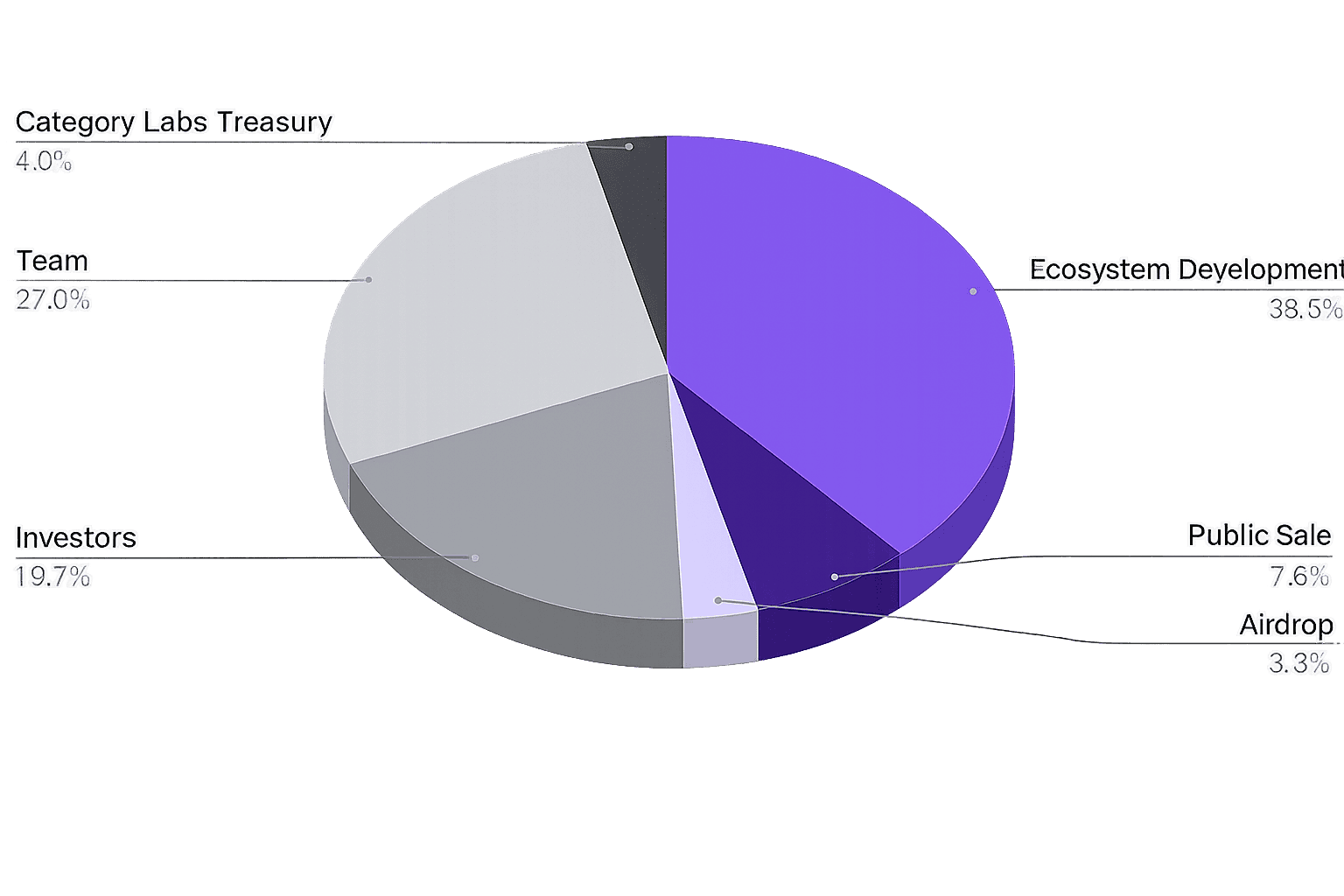
Core functions:
- Transaction fees
- Validator staking
- Network security
- dApp utility (DeFi, NFTs, gaming)
Validator economics:
- Validators stake substantial amounts of MON
- Earn rewards from block rewards and priority fees
- Automated in-protocol slashing is not currently implemented
Why this matters:
Demand for the monad coin grows with:
- more users
- more transactions
- more dApps
Monad Price and Monad Token Price Metrics
Now to the key topic: monad price and monad token price.
After mainnet, price dynamics depend on real usage.
Main drivers:
- Daily transactions (network activity)
- TVL (Total Value Locked)
- Number of active wallets
- Validator participation
Typical early-stage metrics to watch:
- TPS usage vs capacity
- Gas fees stability
- Liquidity depth on exchanges
Even without exact numbers, the model is simple: more usage = more demand for token
Monad Price Prediction: Realistic Factors
Any monad price prediction should be based on fundamentals, not hype.
Bullish scenario:
- Ecosystem reaches 1000+ dApps
- TPS usage approaches limits
- Strong DeFi + trading activity
- Institutional interest
Neutral scenario:
- Moderate adoption
- Competes with other L1s
- Gradual growth
Bearish scenario:
- Low usage after hype
- Developers stay on Ethereum / Solana
- Weak liquidity
Key takeaway:
monad price prediction depends 80% on adoption, not tech
Monad vs Other L1s: Where It Stands
Compared to Ethereum:
- Faster (seconds vs minutes)
- Cheaper fees
- = Same developer tools
Compared to Solana:
- EVM compatibility
- = High performance target
- – Needs to prove stability at scale
Final Takeaway: Monad After Mainnet
Monad is no longer just a “testnet narrative.”
After the monad mainnet launch date, it became:
- a live network
- with real validators
- real transactions
- and measurable performance
Right now, the market is watching:
- monad price behavior
- ecosystem growth
- and long-term viability
If the network reaches high usage levels, it could become: one of the main high-performance EVM chains
If not - it risks becoming another overhyped L1. That’s why monad news, adoption metrics, and real activity matter more than ever now.
Frequently Asked Questions

A Web3 OG who has navigated the industry’s evolution from whitepapers to widespread adoption. Having built through the euphoria of bull runs and the discipline of bear winters. Opinions are strictly personal, crafted from years of deep-dive research and hands-on experience in the trenches.