


Akash Network: Decentralized Cloud Infrastructure and AKT Price Outlook

Cloud computing has become one of the most important components of modern internet infrastructure. Companies rely on cloud services to host applications, store data, and scale digital products globally. However, the traditional cloud industry is dominated by a few large providers such as Amazon Web Services, Google Cloud, and Microsoft Azure.
This concentration of infrastructure has raised questions about cost, decentralization, and accessibility.
One blockchain-based project attempting to address these issues is Akash Network.
Akash Network is a decentralized cloud computing marketplace that allows users to rent unused computing resources from providers around the world. Instead of relying on centralized cloud services, developers can deploy applications using a distributed network of providers.
Crypto enthusiasts frequently follow akash network news and monitor changes in akt price, the native token of the ecosystem.
What Is Akash Network
Understanding Akash Network
Akash Network is a decentralized marketplace for cloud computing resources. The platform allows individuals and organizations to lease unused computing power to developers who need infrastructure for hosting applications, websites, and services.
Instead of relying on centralized providers, Akash creates a marketplace where supply and demand determine pricing.
This decentralized model allows developers to access computing resources from a wide range of providers, often at significantly lower cost compared with traditional cloud platforms.
Because of this model, Akash Network is sometimes described as the “Airbnb of cloud computing.”
How Akash Network Works
The network operates as a marketplace connecting two main participants:
- Providers
These participants offer computing resources such as servers, GPUs, and storage.
- Deployers
Developers or organizations that need infrastructure to run applications.
When a deployer requests resources, providers compete in an open bidding process. The most efficient offer typically wins.
This system enables competitive pricing and efficient allocation of resources.
Decentralized Cloud Computing
The Problem With Traditional Cloud Infrastructure
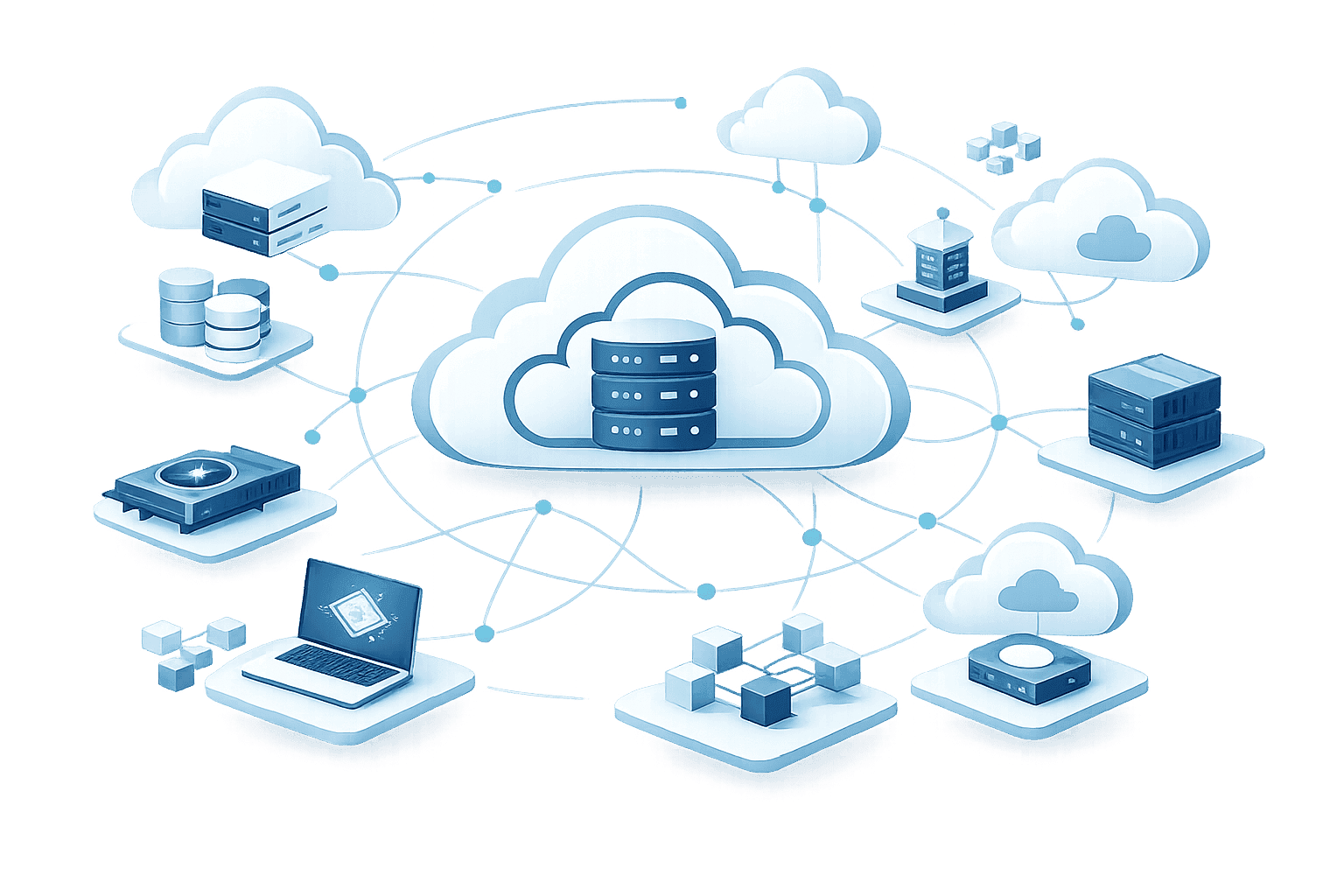
Traditional cloud services offer powerful infrastructure, but they also present several limitations:
- high operating costs
- centralized control
- limited transparency
- vendor lock-in
Developers often become dependent on specific providers, making migration difficult.
Akash Network addresses this through an open marketplace model.
The Web3 Cloud Infrastructure Model
Web3 applications require infrastructure aligned with decentralization principles.
A decentralized cloud can provide:
- censorship resistance
- transparency
- distributed hosting
- competitive pricing
Because of this, akash network has become one of the leading decentralized cloud infrastructure projects.
AKT Token and the Akash Economy
The Role of the AKT Token
The native asset of the ecosystem is the AKT token.
It is used for:
- paying for cloud services
- staking
- governance
- incentivizing providers
This creates a unified economic model inside the network.
Staking and Network Security
Akash operates on a Proof-of-Stake model.
Validators secure the network by staking AKT, while delegators can participate by assigning tokens to validators and earning rewards.
This structure supports both decentralization and network stability.
AKT Price and Market Dynamics
Factors Influencing AKT Price
The akt price is influenced by several key factors:
- demand for decentralized cloud infrastructure
- growth of Web3 applications
- expansion of AI workloads
- overall crypto market conditions
Infrastructure Demand and Token Value
Infrastructure tokens derive value from real usage.
If more developers deploy applications on Akash Network, demand for AKT may increase.
This is especially relevant as demand for GPU computing continues to rise.
Akash Network News and Ecosystem Development
Recent months have marked a major shift for Akash Network as it moves from a niche decentralized cloud project to a more widely recognized infrastructure layer, particularly at the intersection of AI and compute markets.
One of the most important milestones came in Q1 2026, when Akash reached an all-time high of $5 million in compute spend within just 90 days. This metric is significant because it reflects real usage of decentralized compute, not just speculative activity.
A defining upgrade during this period was the launch of the BME (Buy-Mint-Exchange) tokenomics model, which went live on March 23, 2026 (Proposal 318). This is the most substantial change to AKT economics since the network’s inception. BME fundamentally links network usage to token demand: when users purchase compute, the system automatically buys AKT on the open market, burns it to mint a non-transferable stable unit (ACT), and uses it for settlement. Providers receive ACT and can convert it back to AKT at market price.
The result is a model where every compute transaction directly drives demand for AKT, while still maintaining price stability for users.
Another major development is the introduction of Akash Homenode (Beta, 2026) - a new category of decentralized compute supply. For the first time, individual users can contribute GPU power from their own hardware (such as RTX 4090 or RTX 5090) and earn from network demand. This significantly expands Akash’s infrastructure beyond traditional data centers into a globally distributed network of consumer hardware. It also improves resilience: instead of relying on centralized facilities, compute is spread across multiple regions, reducing single points of failure.
On the product side, Akash has made a strong push into AI infrastructure. The launch of Akash Agents (2026) introduced one-click deployment of AI agents on decentralized compute, lowering the barrier for developers to build and run autonomous systems. This builds on earlier tools like Akash Console and reflects growing demand for agent-based AI workloads.
At the same time, AkashML has achieved meaningful traction. By early 2026, it was processing over 1.7 billion tokens per day via OpenRouter, even surpassing some centralized infrastructure providers in usage metrics. This positions Akash as a viable alternative in the AI inference market.
Ecosystem activity has also accelerated through hackathons and developer adoption. Projects built on Akash now include healthcare AI agents, self-healing infrastructure systems, and real-time computer vision tools - many developed under production-like conditions rather than as simple prototypes.
Taken together, recent Akash Network news highlights a clear direction: the project is no longer just a decentralized cloud experiment. It is actively positioning itself at the convergence of AI infrastructure, GPU compute markets, and decentralized cloud, with measurable usage and a rapidly evolving ecosystem.
GPU Marketplace and AI Infrastructure
Artificial intelligence requires massive computational resources.
Akash Network enables GPU providers to offer resources in a decentralized marketplace.
This allows developers to:
- train machine learning models
- run AI workloads
- access compute without centralized providers
This positions Akash as a potential infrastructure layer for AI.
Benefits of Akash Network
Lower Costs
Competition between providers often leads to significantly lower pricing.
Decentralization
Akash reduces dependence on centralized cloud providers.
Open Marketplace
Anyone can join as a provider, increasing supply and competition.
Challenges and Competition
Despite its advantages, decentralized cloud infrastructure faces challenges:
- dominance of major cloud providers
- need for reliability and uptime
- performance consistency
Akash Network continues improving these areas.
The Future of Akash Network
As Web3 and AI continue to grow, demand for decentralized infrastructure is increasing.
Akash Network aims to become a core layer for:
- decentralized cloud computing
- AI workloads
- distributed applications
The community continues to monitor:
- akash network news
- adoption of decentralized cloud
- GPU demand
- long-term akt price trends
If decentralized infrastructure adoption continues, Akash Network could play a major role in the future of cloud computing.
Frequently Asked Questions

A Web3 OG who has navigated the industry’s evolution from whitepapers to widespread adoption. Having built through the euphoria of bull runs and the discipline of bear winters. Opinions are strictly personal, crafted from years of deep-dive research and hands-on experience in the trenches.