


Celestia (TIA): Modular Blockchain Infrastructure, Market Value, and Token Price Prediction

The blockchain industry is evolving rapidly as developers search for more scalable ways to build decentralized systems. Early blockchain networks were designed as monolithic systems where execution, consensus, and data storage were handled by a single chain.
However, as blockchain adoption grows, this design creates limitations in scalability and efficiency.
Celestia introduces a different approach.
Instead of executing applications directly on the base chain, Celestia focuses on providing data availability and consensus infrastructure for other blockchains. This modular architecture allows developers to launch new chains quickly while relying on shared security.
At the center of the ecosystem is the TIA token, which secures the network and powers its economic model.
Because of its role in modular blockchain architecture, market participants closely follow tia price and celestia price, while discussions around celestia price prediction often reflect expectations about long-term adoption of modular infrastructure.
What Is Celestia
A common question among developers and investors is: what is Celestia?
Celestia is a modular blockchain designed specifically to provide data availability and consensus for rollups and decentralized applications.
Traditional blockchains such as Ethereum or other Layer-1 networks process everything directly on-chain. This includes executing smart contracts, storing transaction data, and reaching consensus across the network.
While this model works well for many use cases, it becomes difficult to scale when network activity grows.
Celestia solves this problem by separating responsibilities.
Instead of executing applications directly, the network focuses on ensuring that data published by rollups is available and verifiable.
This approach allows developers to build customized execution environments while relying on Celestia for shared security.
The Rise of Modular Blockchains
The concept of modular blockchains has become one of the most important trends in Web3 infrastructure.
In traditional monolithic blockchains, all network functions occur within the same system. Execution, consensus, and data availability are tightly connected.
When network activity increases, these components compete for resources, which can lead to congestion and high transaction fees.
Modular blockchain architecture separates these responsibilities into different layers.
For example:
- execution layers run smart contracts
- settlement layers finalize transactions
- data availability layers ensure information remains accessible
Celestia focuses specifically on the data availability layer, which is critical for rollup-based ecosystems.
By specializing in this function, the network allows developers to build scalable systems without needing to maintain their own security infrastructure.
Understanding the TIA Token
The native token of the Celestia ecosystem is TIA.
TIA plays several essential roles within the network.
Securing the Network
Celestia utilizes a Delegated Proof-of-Stake (DPoS) consensus mechanism.
Crouton Digital operates a validator node, allowing $TIA$ holders to delegate their tokens to our infrastructure. This combined voting power secures the network, and in return, both the validator and its delegators receive staking rewards proportional to their contribution.
Paying Data Availability Fees
Rollups and applications pay fees (in TIA) to publish data on Celestia.
As more projects use the network, demand for TIA may increase.
Governance Participation
TIA holders can participate in governance decisions.
This includes voting on upgrades and protocol changes.
TIA Price and Market Dynamics
Like most crypto assets, tia price is influenced by multiple factors:
- ecosystem growth
- demand for rollups
- token supply dynamics
- overall market conditions
Investors often track celestia tia price as a reflection of how the market values modular blockchain infrastructure.
Celestia Price and Infrastructure Demand
The celestia price is closely tied to the adoption of modular blockchain architecture.
As more developers build rollups, the demand for data availability layers increases.
Because Celestia focuses specifically on this segment, it is often compared with other data availability projects such as Avail, Zero Gravity, EigenDA, NEAR Protocol, and Starknet.
These comparisons help investors and analysts evaluate the long-term potential of modular blockchain systems and better understand how Celestia is positioned within the evolving infrastructure landscape.
Celestia Price Prediction: Key Factors
When discussing celestia price prediction, analysts usually focus on long-term adoption trends.
Adoption of Modular Architecture
If modular blockchains become the dominant model, Celestia could benefit significantly.
Developer Activity
More rollups mean higher demand for data availability.
This directly impacts expectations around tia price.
Market Liquidity
Institutional interest in infrastructure projects can influence long-term celestia price prediction.
Celestia News and Ecosystem Updates

In recent months, Celestia has been clearly transitioning from a conceptual project to production-level infrastructure, supported not just by ecosystem trends but by concrete protocol upgrades.
One of the most important milestones was the Lotus upgrade (May 2025). This update focused on refining the network’s economic model, including adjustments to inflation and staking parameters. The goal was to create a more sustainable reward structure for validators and better align long-term incentives across the network.
Another major development followed with the Matcha upgrade (September 2025). This upgrade was primarily designed to prepare the network for higher throughput. It introduced changes aimed at supporting larger block sizes in the future, which is critical for scaling Celestia’s data availability layer as more rollups come online.
Alongside these upgrades, real ecosystem usage has been steadily growing. An increasing number of rollups are building on Celestia for data availability (DA), enabling faster and more efficient chain deployment compared to traditional Layer 1 architectures.
At the same time, Celestia is becoming more deeply integrated into the broader modular blockchain stack. It is increasingly used in combination with:
- Ethereum as a settlement layer
- rollups as execution environments
- cross-chain solutions for interoperability
This composability is one of the main reasons developers are paying close attention to Celestia.
There is also rising interest from infrastructure-focused funds and institutional players, who are beginning to view data availability as a critical layer in blockchain architecture rather than an experimental concept.
Overall, recent celestia news suggests that the project is no longer just experimental - it is becoming part of real production-level infrastructure.
Key Advantages of Celestia
Data Availability Sampling
Celestia uses Data Availability Sampling (DAS), allowing light nodes to verify data without downloading full blocks.
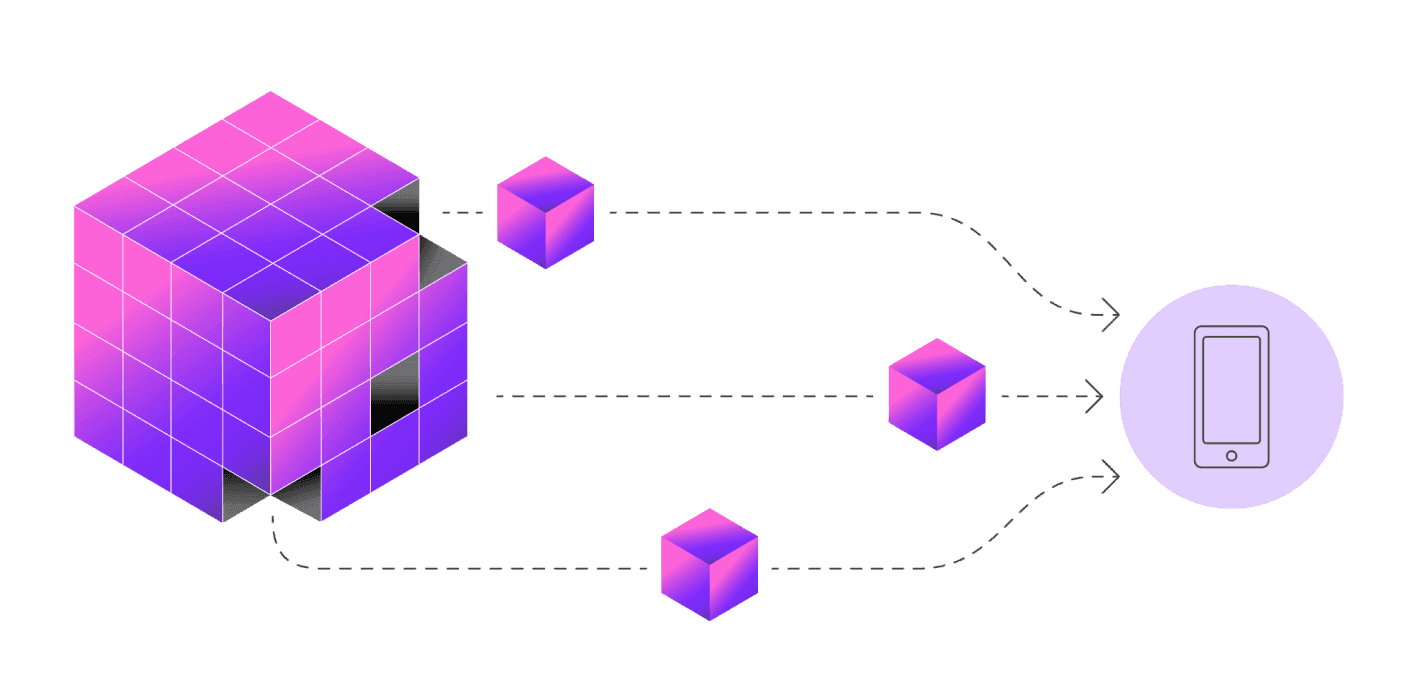
This improves scalability while maintaining decentralization.
Rollup-Friendly Design
Celestia is optimized for rollups.
Developers can launch chains without building their own validator networks.
Modular Flexibility
Developers can create custom execution environments while using Celestia for data availability.
Risks and Challenges
Despite its strong architecture, Celestia faces several challenges:
- modular design is still early-stage
- competition in the DA sector is increasing
- ecosystem growth is critical for long-term success
The Future of Celestia and TIA
The blockchain industry is gradually shifting toward modular infrastructure.
Celestia aims to become one of the foundational layers in this new architecture.
As adoption grows, market participants will continue tracking:
- tia price
- celestia price
- celestia price prediction
as indicators of ecosystem development.
For developers and investors, Celestia remains one of the most important infrastructure projects shaping the future of scalable blockchain systems.
Frequently Asked Questions

A Web3 OG who has navigated the industry’s evolution from whitepapers to widespread adoption. Having built through the euphoria of bull runs and the discipline of bear winters. Opinions are strictly personal, crafted from years of deep-dive research and hands-on experience in the trenches.