


Why Free RPC Endpoints Are Not Enough for Production Web3 Applications

What Are Free RPC Endpoints and How Are They Used in Web3?
A free RPC endpoint is a publicly accessible API gateway that allows applications to read blockchain data and submit transactions without requiring payment. These endpoints are typically provided by infrastructure companies, validator teams, or community initiatives as a free tier to support ecosystem growth.
Rpc free services are widely used by developers for testing and prototyping, offering quick access (often with a free account); testnet deployments for debugging smart contracts; hackathons and MVP development for low‑cost experimentation; and small‑scale projects with low traffic or personal tools. Many gateways are available across networks like Ethereum, BSC, Polygon, and Solana. For example, developers often search for free solana rpc or free eth rpc to get started quickly. Some projects also rely on such services for early development.
Free RPC is a good starting point, but production infrastructure should be built around reliability, monitoring and failover.
When Is a Free RPC Endpoint Suitable?
Free RPC endpoints are not inherently bad. They serve a clear purpose and are often the best choice in specific scenarios.
Appropriate Use Cases for Free RPC
- Local development and debugging
- Testnet deployments
- Proof‑of‑concept prototypes
- Low‑volume personal or hobby projects
- Learning and experimentation
When Free RPC Is Not Enough
The moment your application reaches production with real users, real transactions, and real expectations, the limitations of free blockchain rpc endpoints become apparent. Understanding the difference between casual use and production demand is critical. A shared endpoint might work for a weekend hackathon, but it will not sustain a live application. Even a solana rpc free tier, while useful for initial tests, quickly reveals its constraints under real‑world load.
What Does Production Mean for a dApp or Crypto Product?
In the context of Web3, production means real users interacting with your application, real assets (tokens, NFTs, stablecoins) being transferred, transaction volume that is consistent or growing, uptime expectations – users expect the app to work 24/7, and economic stakes – failed transactions can cost money. When your product is live and users rely on it, even a small infrastructure failure can result in lost revenue, damaged reputation, and churn. Best‑rated rpc node service for web3 providers are often evaluated based on how well they handle production workloads.
Why Free RPC Endpoints Are Not Sufficient for Production
Free RPC endpoints are shared resources with inherent limitations. They are designed to be "good enough" for low‑load scenarios, not for mission‑critical applications.
Rate Limits, Quotas, and 429 Errors
Most free RPC services enforce strict rate limits – typically 10–50 requests per second per IP, depending on the provider. When you exceed the limit, the node returns an HTTP 429 error, and your application stops working. For a production dApp with hundreds of concurrent users, rate limits are a constant bottleneck. Users see "failed to fetch" errors, transactions fail to broadcast, and real‑time data stops updating. This is why teams often search for the best free bsc rpc endpoints 2026 but quickly realize that free tiers have hard caps.
Shared Infrastructure, Latency, and Unstable Speeds
Public endpoints are shared across thousands of developers. During peak usage, response times can spike from 200 ms to over 1 second. For applications like trading interfaces or order books, this latency is unacceptable. Unpredictable response times, delayed transaction confirmations, and poor user experience during high‑load periods are common consequences. A free ethereum rpc service, for instance, may become sluggish exactly when you need it most.
Downtime, No SLA, and No Technical Support
Free endpoints come with no uptime guarantee. If the provider's infrastructure goes down, your application goes down with it. There is no SLA, no compensation, and no support team to help you recover. No 24/7 support means issues remain unresolved for hours, no incident communication leaves you unaware of the failure, and no compensation means you bear the full cost of downtime. Free solana rpc nodes are particularly prone to occasional outages, disrupting live services.
Problems with WebSocket, Blockchain Events, and Transaction Delivery
Many production applications rely on WebSocket connections to listen to blockchain events in real time. Free RPC endpoints often have strict limits on WebSocket connections, disconnections, and stale data. Missed events (e.g., new blocks, transaction confirmations), stale UI data, and transaction delivery failures are frequent issues. The free solana rpc endpoints available for testing rarely match the reliability needed for a live validator or trading application. Similarly, a free eth rpc may drop subscriptions during high traffic.
How an Unstable RPC Affects User Experience
When your RPC endpoint fails, your users are the first to notice. The impact is not just technical – it's experiential and financial. Transaction failures cause users to lose time and gas fees due to repeated attempts. Slow loading makes the app appear broken, inconsistent data shows incorrect balances or prices, and churn leads users to leave for more reliable competitors. For projects that rely on free solana rpc nodes or similar free services, these issues become a weekly occurrence.
"An unreliable RPC endpoint doesn't just break your backend – it breaks your users' trust."
Why Risks Are Higher for DeFi, Trading, Wallets, NFT Platforms, and Blockchain Games
Certain types of applications are particularly vulnerable to free rpc limitations. DeFi protocols depend on low‑latency, reliable data for price feeds, swaps, and liquidations. Trading platforms require every millisecond to matter – failed orders equal lost revenue. Wallets need instant balance updates and transaction confirmations. NFT platforms require consistent availability for metadata fetching and minting. Blockchain games rely on real‑time events, asset transfers, and user progression – all RPC‑dependent. For these applications, a single RPC outage can cost thousands of dollars or cause irreversible user churn. Top web3 rpc node services are built precisely to handle such mission‑critical workloads.
Public RPC vs Free-Tier RPC vs Paid RPC – What's the Difference?
Understanding the spectrum helps you choose the right level of service. When evaluating available options, it is important to remember that free tiers often have hidden limitations.
| Feature | Public RPC | Free‑Tier RPC | Paid Shared RPC | Dedicated RPC |
|---|---|---|---|---|
| Cost | Free | Free (with account) | Monthly subscription | Custom pricing |
| Rate limits | Very strict | Moderate | Higher | Very high / customizable |
| Latency | Unpredictable | Variable | Consistent | Lowest |
| Uptime SLA | None | None | 99.9%+ | 99.99%+ |
| WebSocket | Limited | Limited | Yes (higher limits) | Full support |
| Support | None | Community | Email / ticket | Dedicated 24/7 |
| Best for | Testing, learning | Small projects | Growing dApps | Production, enterprise |
When evaluating RPC providers, developers should consider both performance and support. While solana free rpc options are attractive for early development, they lack the guarantees needed for production.
Signs That Your Project Has Outgrown Free RPC
How do you know it's time to move on? Look for these signals:
- Frequent rate‑limit errors (HTTP 429)
- Users reporting slow transaction confirmations
- WebSocket disconnections during peak usage
- Downtime lasting more than 10 minutes per month
- Growing transaction volume beyond a few hundred per day
- Support tickets about "network errors"
If you're spending more time troubleshooting RPC errors than building features, it's time to upgrade.
When to Switch from Free to Paid or Dedicated RPC
Transition to paid or dedicated RPC when your application has real users (not just testers), you are processing significant request volumes (e.g., more than 5,000 requests per day as a general guideline), you need reliable WebSocket connections, you require an SLA with uptime guarantees, your revenue depends on transaction success, or you want to offer a premium user experience. The earlier you plan for this transition, the smoother it will be. Even the free solana rpc that work well for prototypes will not meet production standards.
Why Production Should Not Depend on a Single RPC Provider
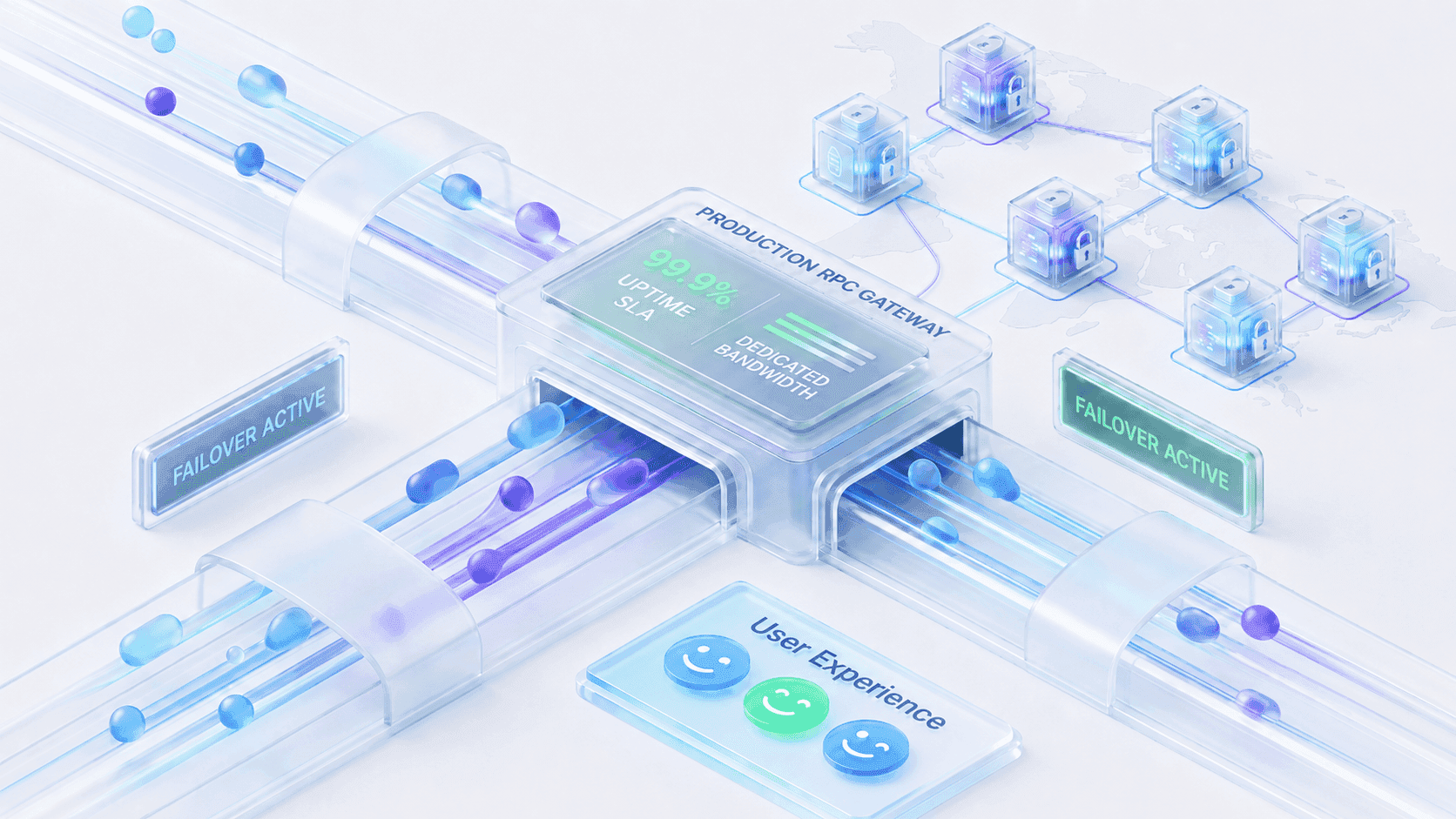
Even a paid provider can experience downtime. Relying on one source is a single point of failure. Best practices include using at least two independent RPC providers, implementing fallback logic to switch to an alternative endpoint if the primary fails, and monitoring RPC health to automatically rotate endpoints. This approach minimises the impact of provider‑side issues and keeps your application online. A fallback strategy is critical for any public endpoint usage in production.
Fallback RPC, Multiple Providers, and Basic Fault Tolerance
A simple but effective strategy involves a primary provider as your main, high‑performance RPC; a secondary provider for redundancy; load balancing to distribute requests across multiple endpoints; and health checks to verify endpoint status before sending requests. Free endpoints or other shared services can serve as a fallback layer for non‑critical read requests, but for transaction submission and real‑time data, paid providers are recommended. Providers like Alchemy, Infura, QuickNode, and Ankr offer both free and paid tiers, making it easy to start with a free plan and upgrade as needed. This is one reason many teams research RPC providers carefully – they want a clear upgrade path.
What to Consider When Choosing a Production RPC Provider
When evaluating providers for production, focus on supported networks, rate limits sufficient for your traffic, SLA and uptime guarantees (99.9% or higher), WebSocket support with connection limits and stability, technical support availability and response times, pricing transparency with predictable costs, and monitoring and analytics dashboards to track performance. Reliable providers typically offer a combination of these features, which is why many teams research and compare options before committing to a paid solution.
Why a Reliable RPC Is Part of Product Stability
RPC infrastructure is not just backend plumbing – it is part of your product's stability and user experience. A slow, unreliable, or frequently failing RPC directly impacts retention as users leave when the app is slow or broken, revenue as failed transactions equal lost fees and opportunities, and brand trust as a broken dApp damages reputation. Investing in reliable RPC infrastructure is investing in your product's long‑term success. Even the free eth rpc that works for development will not sustain a live DeFi application.
Conclusion
Free RPC endpoints are a valuable resource for experimentation, testing, and early‑stage development. They allow you to build and iterate quickly without upfront costs. However, for production applications with real users, real transactions, and real expectations, free endpoints are not enough. Rate limits, latency, downtime, lack of support, and unreliable WebSocket connections create risks that directly affect user experience and business outcomes. When your project grows, evaluate your RPC needs, consider paid or dedicated alternatives, and implement fallback strategies to ensure reliability. Choose a provider that aligns with your scale, supported networks, and performance requirements. Production infrastructure should be built around reliability, monitoring, and failover – not around what is free.
Frequently Asked Questions

A Web3 OG who has navigated the industry’s evolution from whitepapers to widespread adoption. Having built through the euphoria of bull runs and the discipline of bear winters. Opinions are strictly personal, crafted from years of deep-dive research and hands-on experience in the trenches.